
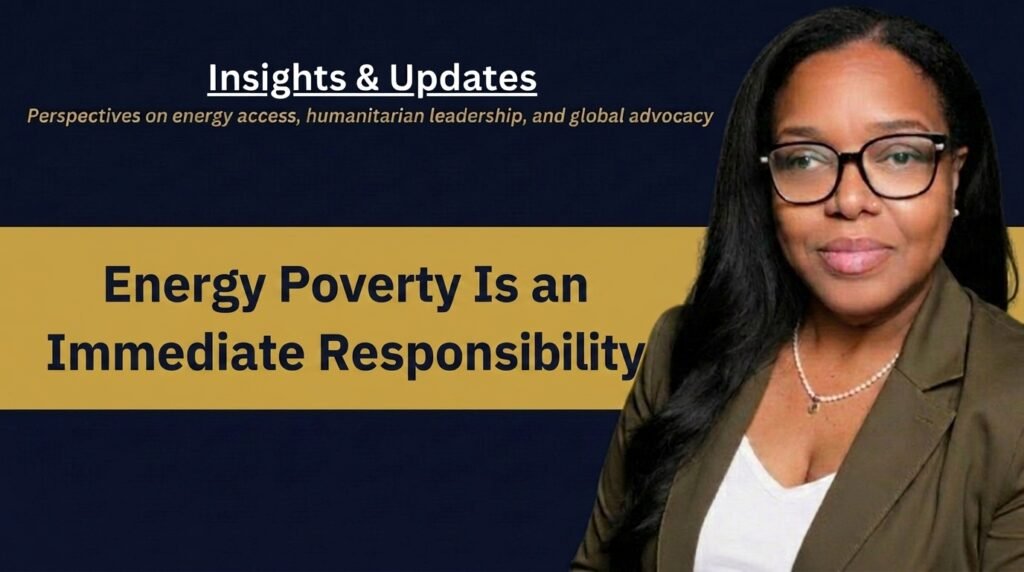
Energy poverty must be confronted with urgency, clarity, and commitment.
The boardroom is where serious conversations begin. It is where leaders set priorities, assess risks, and decide which commitments will receive resources. But leadership is not proven by the quality of a discussion, a declaration, or a strategy document. It is proven when those conversations translate into measurable progress on the ground.
For millions of people, reliable energy remains out of reach. That reality affects far more than whether a light turns on. It determines whether a child can study after sunset, whether a clinic can refrigerate medicines, whether a small business can operate consistently, and whether communities can participate fully in modern economic life.
Access to reliable energy is not a luxury. It is a foundation for economic growth, social development, business expansion, and human dignity. When power is unstable, expensive, or unavailable, opportunity narrows. Entrepreneurs cannot plan with confidence. Schools and hospitals operate under constraints. Institutions struggle to deliver essential services. Families are forced to make difficult choices that no one should have to make.
This is why energy access must be treated as a central development priority, not as a distant objective that can wait for a more convenient moment. Inclusive development cannot be achieved if the systems that power daily life remain inaccessible to the very communities that need opportunity most.
The path forward requires more than broad commitments. It requires practical solutions that are designed for local realities, backed by patient investment, and sustained through strong institutions. It requires public and private leaders to work together, remove barriers to infrastructure development, support innovation, and ensure that the benefits of the energy transition are shared widely.
It also requires accountability. Goals must be accompanied by timelines. Investments must be connected to outcomes. Communities must be able to see and feel the difference that leadership claims to deliver. Progress should be measured not only by announcements made in global forums, but by businesses powered, services strengthened, jobs created, and households reached.
The challenge before us is clear: stop treating energy access as a distant objective and start treating it as an immediate responsibility. Real leadership demands action, investment, and accountability.
Energy poverty is not inevitable. It is a challenge that can be confronted when decision-makers choose urgency over delay and delivery over dialogue.
Lady B Bless — Co-Chair, African & Caribbean Energy Network (https://acenergynetwork.org) — iamladybbless.com/