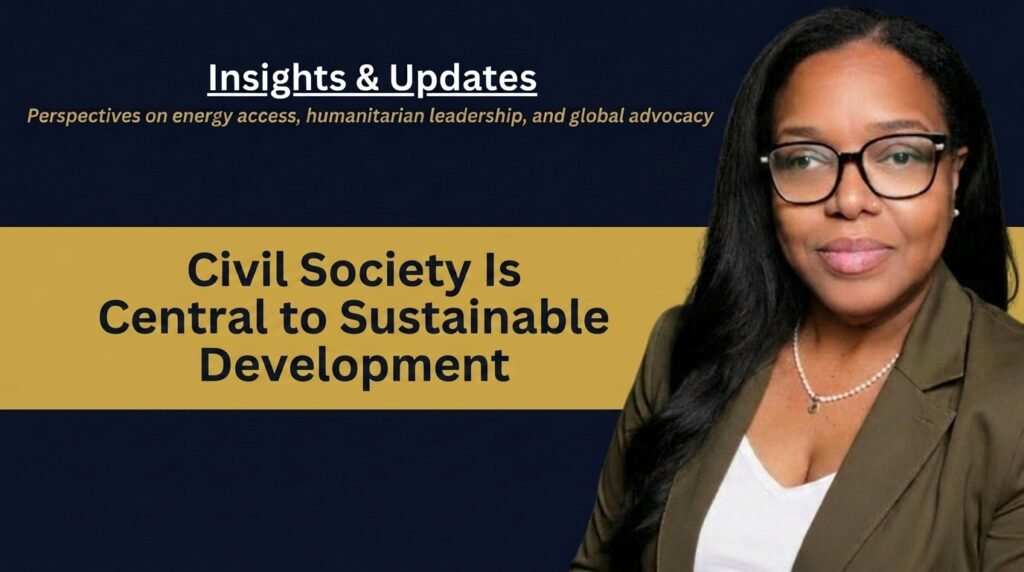
Time and again, the world has witnessed the transformative power of civil society.
As United Nations Secretary-General António Guterres rightly stated: “I have witnessed the enormous impact of civil society in every corner of the world. I see you easing suffering, pushing for peace and justice, and mobilizing for change.”
Civil society is not a peripheral voice; it is a driving force behind sustainable development, accountability, and inclusive progress.
From grassroots organizations to global advocacy networks, civil society bridges the gap between policy and people, ensuring that decisions reflect lived realities, not just institutional priorities.
In the context of energy access, climate action, and socio-economic development across Africa and the Caribbean, civil society plays a critical role in:
- Amplifying community voices that are often unheard in high-level decision-making
- Holding institutions accountable to equitable and transparent practices
- Driving innovation through localized, community-informed solutions
- Mobilizing citizens to actively participate in shaping their future
For meaningful and lasting impact, civil society must not be an afterthought. It must be embedded at every stage: policy design, implementation, monitoring, and evaluation. Inclusive decision-making is not just good practice; it is essential for legitimacy, sustainability, and justice.
As we advance global agendas such as the Sustainable Development Goals, let us reaffirm a simple but powerful principle: no decision about the people should be made without the people.
The future we seek, equitable, resilient, and sustainable, can only be built through collective action.
Civil society is not just part of the conversation; it is central to the solution.
Lady B Bless — iamladybbless.com/